~ musings on feeling, sensing, breathing, moving & being ~
AHIMSA & SATYA // non-harming and Truth
"it is not our minds but the inner voice of our very cells,
which has the power to implement our intentions"
From the Yoga Sutras of Patanjali comes the "8 Limb" path of yoga... meaning, 8 "branches" that we are to learn from and tussle with, to embody and be our whole, yoked, fully integrated and evolved, selves - according to this classical yogic text. There is a curve-ball though, because the first 2 branches have 5 subdivisions each.
nevertheless!! here are the 8 limbs:
Yamas // practices and contemplations that honor community and interconnection
Niyamas // practices and contemplations that honor the divine within ourselves
Asana // physical practice technology that harmonizes and purifies the bodymind
Pranayama // practices of breath and energy
Pratyahara // connecting our sensory organs and experience to our heart, and chakra body
Dharana // practices of one-pointed concentration on the objects of our devotion (mantra, devata, etc)
Dhyana // practicing sustained meditative focus
Samadhi // blissful union and absorption in Supreme Consciousness
from here, the first two YAMAS are:
(i) Ahimsa = non-harming or non-violence (made noteworthy by Mahatma Ghandi as this was his primary spiritual practice)
(ii) Satya = Truthfullness or sincerity
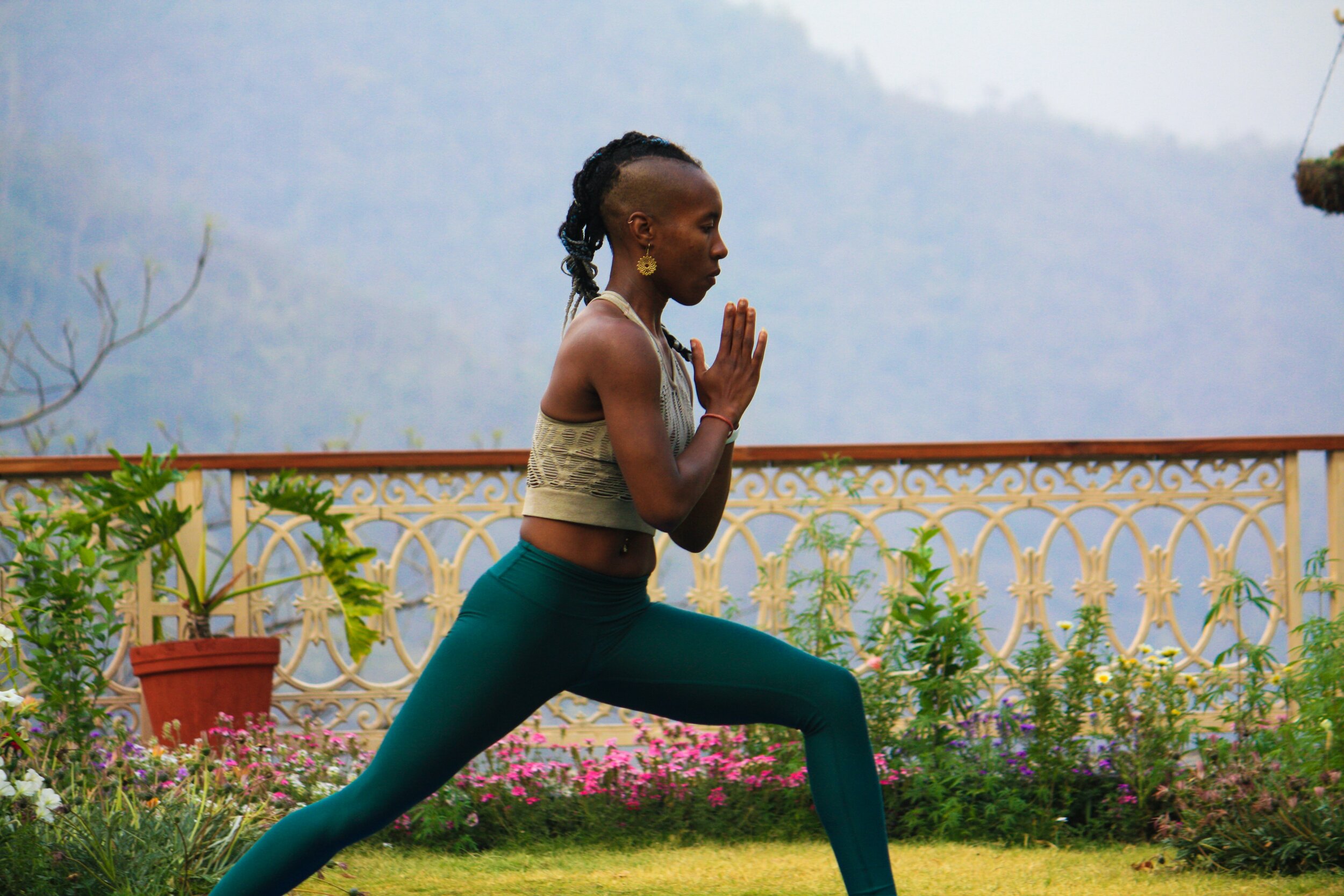
Ahimsa is the perfected embodiment of Love.
AHIMSA //
non-harming in thought, word or deed.
or a deep cellular inner-peace and goodwill that permeates your every word, thought and deed.
“𝘉𝘺 𝘢𝘣𝘪𝘥𝘪𝘯𝘨 𝘪𝘯 𝘯𝘰𝘯-𝘷𝘪𝘰𝘭𝘦𝘯𝘤𝘦,
𝘰𝘯𝘦’𝘴 𝘱𝘳𝘦𝘴𝘦𝘯𝘤𝘦 𝘤𝘳𝘦𝘢𝘵𝘦𝘴 𝘢𝘯 𝘢𝘵𝘮𝘰𝘴𝘱𝘩𝘦𝘳𝘦 𝘪𝘯 𝘸𝘩𝘪𝘤𝘩 𝘢𝘭𝘭 𝘩𝘰𝘴𝘵𝘪𝘭𝘪𝘵𝘺 𝘤𝘦𝘢𝘴𝘦𝘴”
- Yoga Sutra 2.35 .

SATYA // Truthfulness, sincerity.
C O H E R E N C E
a complete integration in all parts of our being that expresses itself as Truth in all that we speak or do.
“As Truthfulness is achieved, the fruits of actions naturally result according to the will of the yogin”
- Yoga Sutra 2.36
SATYA has to do with unveiling our own layers of self-deception,
as well as our fractured, compartamentalized or shadow self.
"it is not our minds but the inner voice of our very cells,
which has the power to implement our intentions"
- BKS Iyengar.
AHIMSA AND SATYA IN PRACTICE
The Yamas and Niyamas are both cause and consequence of themselves, and of sadhana, spiritual practice.
It is through our intentional, diligent, earnest and regular efforts on our mat, on our meditation cushion, and in the ways we show up to our lives, that we begin to truly tussle with and understand what these practices mean to us - and how we are to embody them.
What I’m trying to say is that your understanding and adherence to non-violence or loving-kindness, for example, will be different than it is for someone else. For if there is anything we know about this life for certain is that there is no certainty, and much less any “black and white”.
In fact more than “gray zones” we have in our word the whole magnificent rainbow!
and that is a glorious and wonderful thing.
It is also important to note, that we are invited to tussle with being Loving AND Truthful SIMULTANEOUSLY.
OR, interpreted differently, we are challenged to contemplate if a particular thought, word or deed
that is non-loving, is actually in alignment with ultimate Truth.
The 8 limbs of yoga in the classical understanding are meant to be practiced progressively, continuously, AND simultaneously.
There is a magic to sadhana. Something about quieting your mind, and moving with even, aware breathing, purifies the bodymind, and reveals to us the places where we are fractured or in self-deception, and shows us how to re-integrate and evolve from these past patterns, karmas, and samskaras.

We will be contemplating Ahimsa and Satya —- (and the rest of the Yamas and Niyamas in due time) in my coming classes. I would be so delighted if you chose to join us anytime!
Please see my class schedule for details and do not hesitate to email me if you have any question or need help getting signed up for class.
from love,
Natasha
FOOT NOTE:
I do send out extended versions of these study notes and much more to my newsletter recipients (you can sign up in the homepage) AND even more comprehensive and varied notes to the students enrolled in the YOGA STUDIES program.
NEUROCEPTION
A term coined by Dr. Stephen Porges in the early 90’s, NEUROCEPTION is our BODY’s ability to detect risk outside the realm of our own awareness, and triage our organ function, and nervous response, accordingly.

A term coined by Dr. Stephen Porges in the early 90’s, NEUROCEPTION is our BODY’s ability to detect risk outside the realm of our own awareness, and triage our organ function, and nervous response, accordingly.
What!?.
Yep! Our body is constantly assessing and detecting levels of risk in our environment, in spite of whatever cognitive or perceptual experience the conscious mind is having.
Whats even more fascinating is that the body’s risk assessment system will then send information back up into the brain and impact the PSYCHOLOGICAL experience!
Put in a different way: Your neurological response to stimulus, based on your own developmental and life experiences, is ADAPTIVE, and what this means is that every single person on this planet may have a different physical response to the exact same stimuli.
For example, for someone who has had a past traumatic experience, hearing a specific vocal range from a total stranger may trigger a series of internal, unconscious, physiological responses (including breath and heart-rate response, but also vagal and digestive tone).
.
The body, on it's own, will chose to distrust the completely well-meaning stranger - EVEN IF THE MIND KNOWS THAT THE PERSON IS OK. The lining of their gut, the funcionality of their internal organ systems, and particularly their autonomic nervous system, will shift around that stranger, a person who may even become a "friend"or "co-worker" to the conscious mind, but a threat still to the body.
.
This is not a cognitive response from the person in any way, its NEUROCEPTION. The neural circuitry makes the call.
The whole process occurs underneath realm of the person’s awareness.
.
What’s even more interesting?
.
Your autonomic nervous system, primarily regulated by a large-and-in-charge nerve called your Vagus nerve, transmits information BI-DIRECTIONALLY.
.
This means is that your body's choice to react calmly, defensively, or shut down, IS INFLUENCED in a “downward” direction as well, from your thinking, into your body.
.
You do have the power to shift a nervous response, back into a safety and calm response. But it will take a lot of self-awareness, insight, the company of people who genuinely care about you and impact (calm) your nervous system positively, and practice.
.
The quality of the thoughts circling your mind, the softness or tension in your forehead, the presence of music or sounds that are pleasing to your nervous system, and the work you do to stretch and strengthen your body — all these factors influence your body’s risk assessment system and affect your body's response to stimulus.
.
Overworking yourself more, will definitely have the OPPOSITE effect and jam you deeper into your body's defense mode (anxiety).
.
Whats more, it has been shown that anxious or defensive states are PHYSIOLOGICALLY INCOMPATIBLE with states of compassion and creativity.
.
** Being in extremely stressful, judgemental, neglectful or downright abusive environments WILL short circuit your capacity to respond deeply or compassionately PRECICELY BECAUSE these circuits require you to come out of a stress response in the first place**
.
Amazing no!? (and political too?)
.
>>>> Over time, neuroception is one of the ways that stress impacts our organ and gut health, our outlook on life, and how being in stressful situations, over years without rest, can seriously impact a person's immune response - especially if there is any form of childhood trauma or adverse circumstance. Even if its as simple as being in a stressful job for a long time and never doing the work to "down-regulate" from the fight or flight response in the body. <<<<
.
STRESS rewires your entire body and mind!
.
the good news is, so does rest and restoration :)
.
I teach multiple yoga classes a week in Sacramento that leverage the latest research. The way I share in my classes specifically aims to speak to your BODY and nervous system to learn to release conscious and unconscious anxiety, and enable your body to remember and strengthen its capacity to experience safety, potential and wholeness.
.
Love,
Natasha
Deepening Your Breath Capacity - Part 2
Tension in the mind = tension in the body = tension in the breath.
These can cyclically become the cause AND effect of each other in an unending, life-long perpetuating trap that has its own impact on how we experience and respond to stress.
Tension in the mind = tension in the body = tension in the breath.
These can cyclically become the cause AND effect of each other in an unending, life-long perpetuating trap that has its own impact on how we experience and respond to stress.
BKS Iyengar once famously said: “show me a tense place in your body and I’ll show you a tense place in your mind”.
Rather than focusing on “breathing deeper” when life gets intense, which becomes a stressfull instruction in itself for our already over stimulated body-mind; try feeling into and relaxing a body part - and see if that begins to open up a little window in your mind and breath.
Here are 3 examples to try while laying on your back - any one of these, done patiently, generously, slowly, over several long exhales, should do the trick:
👉🏼 Laying on your back, eyes closed, focus on breathing and feeling into your lowest ribs and relaxing them towards the ground evenly, one exhale at a time. (You should feel your whole spine lengthen and relax when you do).
👉🏼 Same as above, but work on breathing and feeling into the back, top edge of your pelvis and sacrum, and melting it into the ground underneath you with long exhales.
👉🏼 Same as above, but focus on relaxing your abdominal contents into your pelvic bowl, one exhale at a time.
These are just some examples but really any part will do. Feet, throat, jaw/teeth/tongue, brain, knees, palms/fingers/toes - you name it! Pick, play and experiment 🙂.
Bringing the kindness of your own heart into your body parts is its own very special kind of medicine.
🌲 For extra potency, try any one of these laying on the grass, in your back yard, in a park, or under any friendly tree.
🤍 N.
Deepening your breath capacity - Part 1
The way you breathe has a direct effect on your mental-emotional state, and the opposite is also true: like a catch 22, an anxious state triggers shallow dissociated breathing, which in turn increases your body’s fear response, experienced often as what we call anxiety.
The way you breathe has a direct effect on your mental-emotional state, and the opposite is also true: like a catch 22, an anxious state triggers shallow dissociated breathing, which in turn increases your body’s fear response, experienced often as what we call anxiety.
Controlling our mind when in panic mode is a nearly impossible feat - however regulating your breathing is not, and it turns out that when you consciously regulate your breath, the mind follows suit and becomes stabilized: deepening insight, awareness, and your conscious capacity to respond skillfully to threat/stress.
Next time you find yourself caught in anxious or circuitous thinking, pause, take a time-out, and close your eyes:
1. Feel your shoulders relax on your back and your hips root into your seat.
2. Rather than trying to “deepen your breath”, or mentally solve the problem at hand, quiet your mind and begin to slowly count and lengthen each exhale, until you are consistently breathing out for 7-10 counts consistently and you have felt your inner state shift.
3. Go slowly, the feeling of rushing is part of what triggers anxiety. Remind yourself there is no need to rush. Let your breath become your inner ally and guide.
4. Practice this breathing for 5-10 minutes and feel your whole system shift into a deeper, clearer state.
Learning to “breathe deeper” consistently, and especially when triggered, takes regular consistent practice - until it becomes second nature and you can automatically resort to it in high-pressure moments.
Practice this for 5 minutes daily in the morning or evening to begin to tap into the power of the mind-breath connection in daily life.